

Delta First Class Upgrade: Prices, Tips & When It’s Worth It

By flightshelpcenter
Published on January 27, 2026
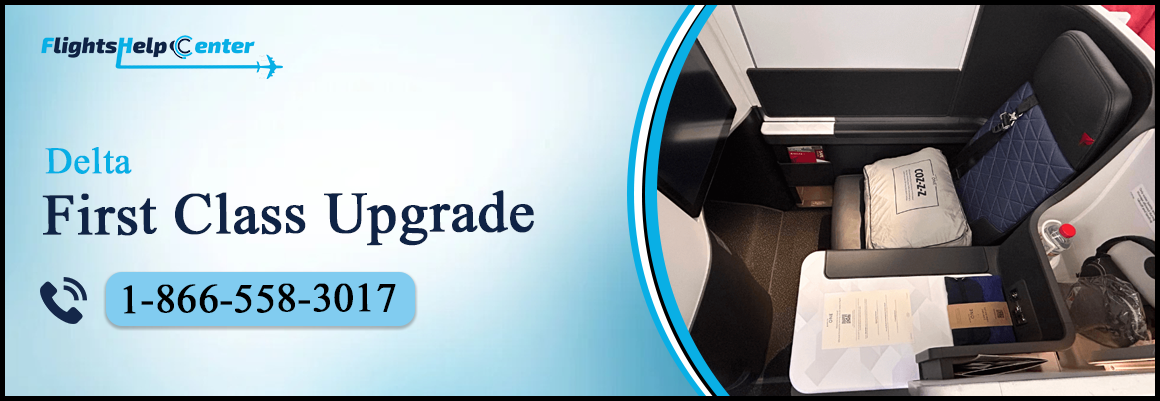
Upgrading to Delta First Class can cost anywhere from $27 to over $2,000, depending on route demand, timing, and seat availability. On most medium to long domestic flights, upgrade offers typically fall in the $200–$600 range.
It’s important to note that Delta First is not a traditional international-style First Class. Instead, it is a premium domestic cabin focused on added comfort and convenience rather than luxury. This makes upgrade pricing highly variable and dependent on when and where you’re flying.
In this guide, we break down Delta First Class upgrade costs, real route-based pricing examples, the difference between Delta First Classic vs Delta First Extra, and when paying for Delta First actually makes sense.
Quick Overview: Delta First Class Upgrade Cost
Delta First Class is Delta Air Lines’ highest cabin on most domestic and short-haul international routes. Upgrade pricing is dynamic, meaning prices fluctuate based on demand, route, timing, and seat availability.
At a glance:
- Delta First upgrade prices generally range from $27 to $2,000+
- Most upgrades fall between $200 and $600 on medium to long domestic flights
- Short routes and midweek flights usually offer the lowest upgrade prices
- Peak business routes and holiday travel tend to have the highest upgrade costs
- Delta First Classic and Delta First Extra provide the same seat and onboard experience, with price differences driven by ticket flexibility rather than comfort
What Is Delta First Class?
Delta First Class (often simply called Delta First) is Delta Air Lines’ highest cabin on most domestic flights within the United States, as well as some short international routes such as Canada, Mexico, and the Caribbean.
It is important to understand that Delta First is not the same as international first class offered by airlines like Emirates or Singapore Airlines. Instead, Delta First is closer to a premium domestic business class product.
What You Typically Get With Delta First:
- Wider, more comfortable seats with extra legroom
- Priority boarding and deplaning
- Complimentary meals on longer routes
- Free alcoholic and non-alcoholic beverages
- Dedicated overhead bin space
- Higher baggage allowance
- More attentive service compared to Main Cabin
For many travelers, Delta First is about comfort and convenience, not over-the-top luxury.
Does Delta Offer “True” First Class?
No—at least not on most routes.
Delta does not sell a traditional first class product comparable to what you see on international airlines. On long-haul international flights, Delta’s top cabin is Delta One, which is a business class product with lie-flat seats.
Delta First exists primarily for:
- Domestic U.S. routes
- Near-international routes (Canada, Mexico, Caribbean)
- Select premium transcontinental flights
This distinction is important because Delta First pricing reflects domestic premium seating—not international First Class luxury.
How Much Does It Cost to Upgrade to Delta First Class?
Delta does not offer a fixed price for First Class upgrades. Instead, upgrade costs are dynamically priced and can change multiple times before departure based on demand, route, timing, and seat availability. As a result, some flights may show surprisingly low upgrade offers, while others—especially popular or long-haul routes—can be significantly more expensive.
In general, Delta First Class upgrade prices fall into the following ranges:
- Low-end upgrades ($27–$150):
These deals are uncommon but can appear on short routes or low-demand flights, particularly during off-peak travel periods or midweek departures. - Average upgrades ($200–$600):
This is the most typical price range for Delta First upgrades and is commonly seen on medium to long domestic flights outside peak travel seasons. - High-end upgrades ($1,000–$2,000+):
Premium transcontinental routes, flights with heavy business demand, and peak travel dates often command much higher upgrade prices.
Because Delta uses dynamic pricing, upgrade costs can fluctuate frequently. This means Delta First upgrades may sometimes feel unexpectedly affordable—or surprisingly expensive—depending on when and where you are flying.
Factors That Affect Delta First Class Upgrade Prices
Several elements influence how much Delta charges for a First Class upgrade:
1. Route Length
Short flights (under 2 hours) usually have cheaper upgrades, while cross-country or high-demand routes cost significantly more.
2. Aircraft Type
Planes with larger First Class cabins often have more upgrade availability, which can lower prices.
3. Demand & Seasonality
- Holidays and peak travel seasons = higher upgrade costs
- Midweek, off-peak travel = better deals
4. Fare Class You Booked
Passengers who booked higher Main Cabin fares may see cheaper upgrade offers.
5. Timing
Upgrade prices can change multiple times before departure. Prices may drop within 24–72 hours of departure if First Class seats remain unsold.
Real Pricing Example: Atlanta to Seattle
Prices shown are real-world examples and may vary based on date, demand, and availability. To understand how Delta First Class pricing works in real-world scenarios, consider a popular transcontinental route: Atlanta (ATL) to Seattle (SEA).
On a typical midweek travel date outside major holidays, Delta operates multiple nonstop flights, each priced differently based on departure time and demand.
Delta First Classic Fare Examples (One-Way)
- Early morning flight: approximately $629, typically priced lower due to reduced demand from business travelers.
- Mid-morning flight: approximately $1,439, often the most expensive option as it aligns with peak business travel hours.
- Late morning flight: approximately $1,099, slightly cheaper than mid-morning departures but still in high demand.
- Afternoon flight: approximately $899, offering a moderate price point as demand begins to taper off.
- Evening flight: approximately $629, usually more affordable due to lower overall demand later in the day.
Delta First Extra Fare Examples (One-Way)
- Early morning flight: approximately $789, reflecting higher flexibility compared to Classic fares while remaining relatively affordable.
- Mid-morning flight: approximately $1,659, priced at a premium due to strong demand and enhanced fare flexibility.
- Late morning flight: approximately $1,319, slightly lower than peak departures but still significantly higher than off-peak options.
- Afternoon flight: approximately $1,119, offering a balance between flexibility and cost.
- Evening flight: approximately $789, typically lower priced as demand decreases toward the end of the day.
Key takeaway:
Even on the same route and date, departure time plays a major role in Delta First pricing, with peak business hours commanding substantially higher fares than early morning or evening flights.
Delta First Classic vs Delta First Extra: A Clear Comparison
Delta First Class tickets are sold under two fare types—Classic and Extra—which differ mainly in flexibility, not comfort. While both fares include the same First Class seat, legroom, meals, and onboard service, the key difference lies in ticket flexibility and fare rules.
| Feature | Delta First Classic | Delta First Extra |
| Seat & onboard experience | Same First Class seat and service | Same First Class seat and service |
| Ticket price | Lower and more affordable | Higher due to added flexibility |
| Change fees | May apply | Usually no change fees |
| Refundability | Limited or non-refundable | Typically fully refundable |
| Best for | Travelers with fixed plans | Travelers needing flexibility |
What This Means for Travelers
Delta First Classic is the better choice if your travel plans are set and you want to save money. It offers the full Delta First experience at a lower price but with stricter change and cancellation rules.
Delta First Extra, on the other hand, is ideal if your schedule is uncertain. You pay more upfront, but gain the freedom to change or cancel your flight with minimal penalties.
Note: Both fares deliver the exact same First Class comfort. Choosing Delta First Extra does not give you a better seat—it simply provides peace of mind and flexibility if your plans change.
Is It Better to Upgrade or Book Delta First Directly?
Whether it is better to upgrade or book Delta First Class directly depends largely on pricing and timing. In many situations, booking Delta First outright can actually be cheaper and more predictable than upgrading later, especially on popular routes.
When Booking Delta First Class Directly Is the Better Option
Booking Delta First at the time of purchase often makes sense when Main Cabin fares are already high. In such cases, upgrade prices tend to be close to the full First Class fare, reducing any potential savings.
It is also a better option when the upgrade price exceeds 60–70% of the Delta First fare. Paying nearly the same amount for an upgrade offers little value compared to booking First Class directly.
Additionally, travelers who need flexibility from the start—such as easier changes or refunds—are usually better off booking Delta First upfront rather than relying on future upgrade offers.
When Upgrading After Booking Makes More Sense
Upgrading can be a smart choice when Delta offers discounted post-booking upgrades, which sometimes appear closer to departure if seats remain unsold.
This approach works especially well if you originally booked a low-cost Main Cabin ticket, allowing you to enjoy First Class comfort for a relatively small additional cost.
Traveling midweek or during off-peak seasons also increases the chances of seeing lower upgrade prices, as demand for First Class seats is typically lower.
Takeaway:
As a rule of thumb, if the upgrade costs more than two-thirds of the First Class fare, booking Delta First directly usually offers better value.
Can You Upgrade to Delta First With Miles?
Yes, Delta does allow passengers to upgrade to Delta First Class using SkyMiles, but the value of these upgrades can vary significantly. Unlike fixed award charts, Delta uses dynamic pricing, which means the number of miles required for an upgrade depends on route demand, availability, and travel dates.
Typical SkyMiles Upgrade Costs
- Short flights: approximately 15,000 – 25,000 SkyMiles
- Medium-length flights: around 30,000 – 50,000 SkyMiles
- Long-haul domestic routes:50,000+ SkyMiles, especially on high-demand routes
Because SkyMiles upgrade pricing fluctuates, the value you receive can differ widely from one flight to another.
Are Miles Worth Using for an Upgrade?
In many cases, paying cash for a discounted upgrade can provide better value than redeeming miles, particularly when upgrade offers are priced relatively low. SkyMiles upgrades tend to make more sense when cash upgrade prices are high or when you have a large miles balance that you are looking to use.
Are Complimentary Upgrades Available?
Yes, complimentary upgrades to Delta First Class are available—but only for Delta Medallion elite members. These upgrades are offered based on availability and are not guaranteed.
Whether a complimentary upgrade clears depends on several factors, including:
- Your Medallion status level (higher tiers have priority)
- Route demand, especially on business-heavy or premium routes
- First Class seat availability at the time of departure
- The fare class you originally booked
On popular routes and during peak travel periods, complimentary upgrades are much harder to secure due to high demand for First Class seats. As a result, even elite members may not receive upgrades on every flight.
When Is Delta First Class Worth the Money?
Delta First Class can be worth the extra cost in specific situations, particularly when comfort, convenience, and time savings matter. While it is not always the best value, the right combination of flight length and upgrade pricing can make a noticeable difference in your travel experience.
Delta First Class Is Worth It If:
- You’re flying for three hours or longer, where the extra legroom, wider seats, and enhanced service significantly improve comfort.
- You value personal space and a quieter cabin, especially if you prefer to work or relax during the flight.
- You want priority boarding and a faster exit, which can save time at busy airports.
- The upgrade price is under $300–$400, a range many travelers consider reasonable for the added comfort.
- You’re traveling for business or on a tight schedule, where comfort and efficiency matter more than cost savings.
Note: Delta First Class offers the best value on longer flights with reasonably priced upgrades. When prices are high or flight duration is short, the benefits may not justify the cost.
When Delta First Is NOT Worth It
While Delta First Class can be a nice upgrade, there are situations where the added cost simply does not deliver enough value. In these cases, sticking with Main Cabin or Comfort+ is often the smarter choice.
Skip Delta First If:
- The flight is under 90 minutes, as there is very little time to fully enjoy the added comfort or service.
- The upgrade cost exceeds $700–$1,000, especially on domestic routes where the benefits remain limited.
- You do not care about meals, priority boarding, or faster exit, which are some of the main perks of Delta First.
- Comfort+ offers similar legroom at a much lower price, making it a more cost-effective upgrade.
Conclusion
Delta First Class sits in an interesting middle ground. It’s not ultra-luxurious, but it does deliver meaningful comfort upgrades—especially on longer domestic flights.
If you can snag an upgrade for a reasonable price, Delta First can be a fantastic way to improve your travel experience. Once upgrade prices climb into four figures, booking Delta First outright—or even choosing Comfort+—often delivers better overall value.
Frequently Asked Questions
How much does it cost to upgrade to Delta First Class?
Upgrade prices vary widely, ranging from $27 to over $2,000 depending on route, demand, timing, and seat availability. Most medium-to-long domestic flight upgrades fall between $200 and $600.
What is included in a Delta First Class upgrade?
Delta First Class offers wider seats with extra legroom, priority boarding, complimentary meals and drinks, dedicated overhead bin space, higher baggage allowance, and attentive service compared to the Main Cabin.
What’s the difference between Delta First Classic and Delta First Extra?
Both fare types provide the same seat and onboard experience. The difference lies in ticket flexibility: Classic is cheaper with limited changes or refunds, while Extra allows easier changes and full refund options.
Can I upgrade to Delta First Class using miles?
Yes, passengers can use SkyMiles to upgrade. Required miles vary by route and demand: short flights are around 15,000–25,000 SkyMiles, medium flights 30,000–50,000, and long-haul domestic flights 50,000+ SkyMiles.
Are complimentary upgrades to Delta First available?
Yes, but only for Delta Medallion elite members, and availability depends on seat availability, route demand, and fare class. Complimentary upgrades are not guaranteed, especially on busy or peak travel flights.
Is it better to upgrade or book Delta First Class directly?
It depends. If upgrade prices are high (over 60–70% of the full fare) or if you need flexibility, booking Delta First directly is usually better. Upgrades are ideal when discounted offers are available post-booking.
When is upgrading to Delta First Class worth it?
Delta First is most valuable on flights over 3 hours, when extra comfort, personal space, priority boarding, and quiet matter. Upgrades under $300–$400 typically offer the best value.
Related Posts
Related Posts
How to Upgrade Seats on American Airlines | Best Upgrade Options
An American Airlines Seat Upgrade allows travelers to enhance their comfort, enjoy premium amenities, and unlock exclusive perks across domestic…

JetBlue Baggage Fees: What to Know
If you’re planning a flight, understanding JetBlue Baggage Fees is essential to avoid surprises and extra charges at the airport.…

How Much Does It Cost to Cancel an Alaska Airlines Flight?
Travel plans don’t always go as expected. Suddenly, any emergencies, urgent work changes your schedule and you are restless to…