
What Really Happened on United Airlines Flight UA770 Emergency Diversion

By flightshelpcenter
Published on September 20, 2025
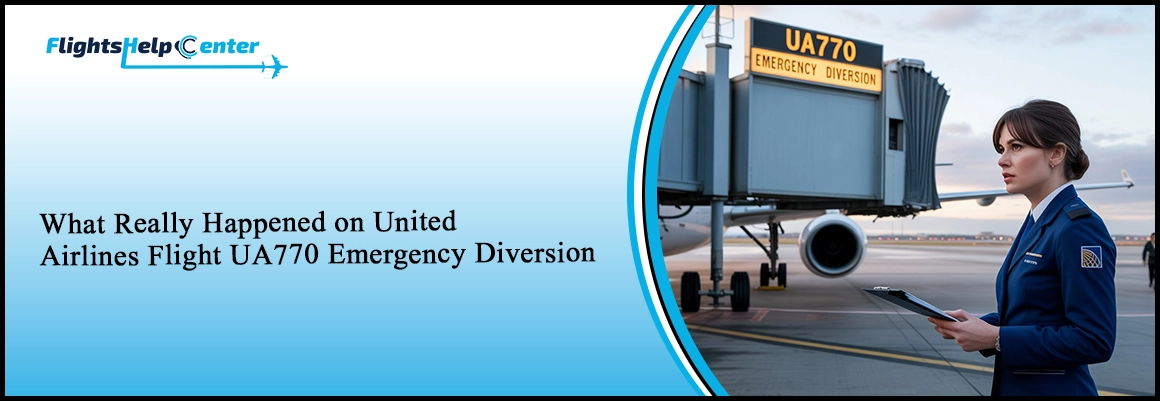
On May 27, 2025, United Airlines Flight UA770, traveling from Barcelona (BCN) to Chicago O’Hare (ORD), declared an in-flight emergency and diverted to London Heathrow (LHR). While the incident created worry among passengers and sparked headlines worldwide, it ended with a safe landing and no injuries.
This guide unpacks what triggered the diversion, how the crew and air traffic control responded, what passengers experienced, and what this case reveals about modern aviation safety.
Quick Summary: United Airlines Flight UA770 Diversion
United Airlines Flight UA770 was forced to divert after a cabin pressurization warning mid-flight. The crew followed safety protocols, declared an emergency, and landed the aircraft safely at London Heathrow.
- The pilots declared a Squawk 7700 emergency, giving the flight priority handling from ATC.
- A controlled descent was performed, with the crew keeping passengers calm.
- London Heathrow was selected for its advanced emergency infrastructure and long runways.
- United Airlines confirmed no injuries and re-accommodated affected travelers.
- Maintenance crews inspected the aircraft to determine the cause.
The safe outcome of UA770 shows how strict safety procedures, trained crews, and effective communication protect passengers even during unexpected in-flight events.
What Triggered the United Airlines Flight UA770 Emergency Diversion?
According to multiple aviation reports, UA770 experienced a cabin pressurization system warning at cruising altitude. Pressurization ensures that passengers breathe safely at high altitudes; even a potential issue requires urgent response.
While no full depressurization occurred, the warning itself was enough for the captain to divert. In aviation, the rule is clear: treat anomalies seriously, act early, and prioritize safety.
Emergency Code “Squawk 7700” & ATC Response
The crew transmitted a Squawk 7700 emergency code through the aircraft’s transponder. This universal code alerts all nearby air traffic controllers and other aircraft that the plane is in distress and requires priority landing.
Controllers immediately cleared a safe route, prioritized the aircraft above other flights, and coordinated emergency services at Heathrow. The crew then began a controlled descent to a breathable altitude, reassuring passengers while preparing for diversion.
Why Heathrow ?
The flight diverted to London Heathrow Airport (LHR) rather than returning to Barcelona or continuing toward Chicago.
The reasons:
- Heathrow has world-class medical and technical emergency infrastructure.
- Its runways are long enough to accommodate widebody aircraft like the Boeing 787-9 Dreamliner.
- It was the nearest suitable airport where safety could be guaranteed.
All passengers deplaned safely, with no reported injuries.
Timeline of Key Events
- UA770 departs Barcelona in the morning.
- About 90 minutes into the flight, a pressurization warning is triggered.
- The crew declares Squawk 7700 and begins emergency descent.
- The aircraft diverts toward London Heathrow.
- The flight lands safely; passengers are rebooked, and the aircraft undergoes inspection.
What to Expect During an In-Flight Diversion
Diversions feel sudden, but the flow is highly choreographed. Expect a short pilot announcement stating the issue and the plan. Cabin crew will secure the cabin and brief passengers for landing.
- The aircraft may descend to a safer altitude — this is normal.
- Oxygen masks deploy only if cabin altitude rises above safe limits.
- Crew will give clear instructions; follow them promptly.
- Pilots choose the nearest suitable airport with strong safety facilities.
Aircraft, Crew Response & Passenger Experience
UA770 was operated by a Boeing 787-9 Dreamliner, carrying more than 250 passengers.
Passengers reported that the crew remained calm, gave clear instructions, and handled the descent with professionalism. While some described tension in the cabin, the absence of panic reflected the crew’s steady communication.
After landing, United Airlines provided assistance with onward travel, meals, and accommodations where required.
How Airlines Handle Diversions Behind the Scenes
When a cockpit declares an emergency, the airline’s ops engine activates immediately:
- ATC coordination: Squawk 7700 gives the flight top priority.
- Ops & Dispatch: Instant Analysis of Weather, runways, and maintenance support.
- Airport emergency teams: Fire and medical crews prepare on standby.
- Maintenance control: Engineers prep for inspection on arrival.
- Customer care: Rebooking and vouchers are lined up before passengers deplane.
Safety Protocols at Work
This event demonstrates the value of aviation safety systems:
- Early detection: Even warnings, not failures, trigger immediate action.
- Crew training: Pilots and cabin staff train repeatedly for pressurization and emergency scenarios.
- ATC coordination: Squawk 7700 ensures rapid assistance and priority clearance.
- Prepared airports: Choosing Heathrow guaranteed access to resources if the situation escalated.
Passenger Rights & Compensation After Diversions
Passengers have specific rights depending on the situation:
- Refunds: If the airline cancels or makes major changes you decline, you’re entitled to a refund for the unused portion.
- Rebooking & care: Airlines rebook at no cost and may cover meals/hotels for long delays.
- EU261 compensation: If airline-responsible, travelers can claim €250–€600 depending on flight distance.
- Documentation: Keep your receipts, boarding pass, and proof of delay/cancellation.
What Passengers Should Do After an Emergency Landing
After an emergency landing, staying calm and taking the right steps can make a big difference. These flight emergency tips not only keep you safe but also help protect your passenger rights and make it easier to manage refunds, rebooking, and insurance claims.
- Stay seated until the crew releases your row. Even after landing, there may be checks happening outside or safety procedures still in place. Moving early can create risks or delays.
- Note the official reason and time of diversion. Write it down or take a quick photo of the flight information board—this helps when filing refund or compensation claims.
- Watch for rebooking messages from the airline. Airlines usually send updates via SMS, email, or app notifications. Respond quickly to secure a new seat before options run out.
- Collect written proof or notices from the airline staff. A delay or cancellation notice can be critical if you later request EU261 compensation or a refund from United Airlines.
- Keep every receipt for extra expenses. Meals, taxis, hotels, and even airport purchases may be reimbursed if the diversion causes long delays.
- Call other airlines if you had onward flights on separate bookings. They usually won’t be notified of the diversion, so contacting them early increases your chance of rebooking.
- Contact your travel insurer if the airline coverage is limited. Many policies cover additional costs after emergency landings, but claims require documentation.
- Secure essentials from your carry-on. Medications, chargers, passports, and ID should stay with you in case you’re rebooked quickly or need to leave the airport.
By following these extended steps, passengers can turn a stressful emergency landing into a managed situation with fewer surprises and a faster recovery of costs and travel plans.
Similar Diversions: Why They Prove Aviation Safety Works
UA770 isn’t unique. Airlines divert for medical issues, weather, and technical alerts more often than people realize — and almost all end safely.
These diversions prove aviation’s philosophy: act early, coordinate globally, and land safely.
Lessons Learned from United Airlines Flight UA770 Emergency Diversion
- Aviation safety works — redundant systems and strict training prevent disasters.
- Conservative decisions (divert early, not late) protect lives.
- Passenger trust depends on clear updates and calm leadership.
- Case studies like UA770 help airlines refine maintenance, crew training, and passenger care.
Conclusion
United Airlines Flight UA770’s emergency diversion ended safely thanks to quick decision-making, global aviation safety standards, and calm crew leadership. While alarming for passengers, it serves as a reminder that modern air travel is built around one principle: safety first.
The incident reinforces confidence that when something goes wrong, systems and people are ready to make it right.
FAQs About United Airlines Flight UA770 Emergency Diversion
Why did United Airlines Flight UA770 divert?+
A cabin pressurization warning triggered the emergency diversion.
What does “Squawk 7700” mean?+
It’s the universal emergency transponder code, signaling a general in-flight emergency.
Were passengers injured?+
No injuries were reported.
Why was London Heathrow chosen?+
It was the nearest major airport with full emergency facilities and suitable runways.
What happens to passengers after a diversion?+
They are rebooked on later flights, and airlines may provide meals or accommodations.
Tips to Stay Calm & Prepared in Mid-Air Emergencies
For many travelers, the thought of an in-flight emergency is unsettling. But knowing a few practical flight safety tips can help you stay calm, support the crew, and protect yourself during unexpected diversions or emergency landings.
Pay close attention to the safety briefing.
Even if you’ve flown dozens of times, every aircraft has slight differences. Understanding where exits are, how oxygen masks work, and what to do in turbulence prepares you to respond confidently in a mid-air emergency.
Keep essential items in your carry-on within reach.
Medications, ID, phone charger, and travel documents should never be in checked luggage. In case of a diversion, having these basics at hand reduces stress and ensures you’re not stranded without what you need most.
Stay buckled whenever you’re in your seat.
Sudden turbulence is one of the most common in-flight risks. Keeping your seatbelt fastened low and tight keeps you safe without restricting movement.
Follow crew instructions immediately and without hesitation.
Flight attendants train constantly for emergencies. Listening carefully and responding quickly helps the entire cabin stay safe and organized.
Remember that diversions mean safety systems are working.
A mid-air diversion or emergency landing isn’t a failure—it’s proof that multiple layers of safety are protecting passengers. Keeping this mindset can ease anxiety and help you stay calm.
These mid-air emergency tips not only improve personal safety but also make the overall experience smoother for everyone on board.


Related Posts

Missed Your Delta Airlines Flight? Here’s Exactly What to Do
Missed your Delta Airlines flight? Don’t worry — the Delta Airlines Missed Flight Policy gives you clear options to rebook,…
JetBlue Baggage Fees: What to Know
If you’re planning a flight, understanding JetBlue Baggage Fees is essential to avoid surprises and extra charges at the airport.…
Air France Baggage Policy – Carry-On & Checked Baggage Guide
Air France Baggage Policy is designed to give passengers clear, structured baggage rules across domestic, international, and long-haul routes while…